Last updated: October 13, 2026
Key Takeaways
- SaaS listing operations support visibility, validation, and conversion; they are not just about showing up everywhere.
- The most useful channels are the ones buyers trust and the ones the product can sustain operationally.
- Pick listings that fit the buying motion, integration surface, and 12-month maintenance capacity.
- Treat submission as a controlled content and compliance workflow, not a marketing scramble.
Quick Answer: For most teams, SaaS tool submission and listing operations work best as a 3-to-5-channel program that you review at least quarterly. SaaS tool submission and listing operations are the work of getting a software product accepted, verified, indexed, and maintained across directories, review sites, marketplaces, and partner ecosystems without creating a mess for sales, support, or SEO. If I had to boil the job down to one question, it would be this: how do you list a SaaS product once, then keep it accurate everywhere it appears without burning time or damaging trust?
I write on software operations and buyer-facing tooling, so I know the difference between a listing that exists and a listing that actually drives qualified traffic, demos, or trials. The first is easy. The second depends on clean inputs, the right submission targets, and a maintenance process that survives product changes.
What SaaS listing operations are really for
SaaS listing operations are for visibility, validation, and conversion, not just “being present” on every directory that accepts a logo. A good listing program does three jobs at once: it makes the product discoverable in search, it gives buyers enough proof to trust the software, and it sends them to the right next step, usually a trial, demo, or marketplace install. That matters because a listing that looks polished but points to stale pricing or a dead CTA creates more friction than value.
The mistake I see most often is treating listings as a one-time distribution task. That mindset fails the moment the product changes a plan name, an integration, a security badge, or a supported platform. Consult a professional if you are not sure which claims need legal, security, or product review; platform rules and disclosure needs vary by site, according to G2 and Google Cloud Marketplace documentation. A directory entry is a living asset, and the operational problem is keeping the listing synchronized with the source of truth. If your sales team updates a pitch deck on Friday and marketing updates the site on Tuesday, the listing still needs a single owner.
This is where the term “submission” matters more than “listing.” Submission is the act of getting approved and live. Listing operations are everything after that: metadata management, category placement, screenshots, attribution links, UTM hygiene, review handling, and refresh cycles. A directory entry on G2, Capterra, Product Hunt, AWS Marketplace, Google Cloud Marketplace, Microsoft AppSource, Salesforce AppExchange, Zapier, Atlassian Marketplace, or Shopify App Store can behave very differently, even if the product is the same. Each platform has its own acceptance rules, field limits, and update path.
The right program is not the one with the largest spreadsheet. It is the one aligned to distribution. If your buyers compare vendors in review sites, prioritize those. If they buy through cloud marketplaces, prioritize those. If they discover tools through integration ecosystems, prioritize those. The wrong focus is submitting to twenty outlets that never shape a buying decision.
Which submission channels matter most for SaaS?
The channels that matter most are the ones your buyers already trust and the ones your product can support operationally. For many SaaS teams, that means a mix of category directories, marketplace listings, integration directories, and review platforms. Consult a professional if your buying motion is unclear, because the exact blend depends on whether your product is sold self-serve, sales-led, or through procurement, and platform requirements differ across G2, Capterra, AWS Marketplace, and Salesforce AppExchange.
Review and comparison sites help most when the buyer is evaluating alternatives. Marketplaces help most when the buyer already knows the ecosystem they want to buy in. Integration directories help when your product wins through compatibility, such as a CRM plugin, automation connector, or cloud-native deployment. A small product with one strong use case can win on one channel and be invisible on another.
I would not start by listing everywhere. I would start by matching channel to intent:
- If buyers compare features before booking a demo, put effort into review platforms and comparison directories.
- If buyers install inside a known ecosystem, prioritize the marketplace tied to that ecosystem.
- If buyers rely on partner validation, use integration and alliance directories.
- If search traffic matters, make sure your listing copy mirrors the language on your own site so the page can be indexed and understood consistently.
This is also where the hidden work begins. A marketplace listing may require security documentation, tax details, app-scoped permissions, or a specific OAuth flow. Consult a professional if your technical, tax, or legal setup is not stable, because a cloud marketplace or app store can reduce procurement friction, simplify installation, or keep the buyer inside a familiar billing relationship, but the fit depends on the platform and product. A review site may require company verification and category selection. A partner directory may need a maintained logo set, short description, and approved brand name. A generic article often ignores this operational burden and talks as if “submit your tool” is one step. It is not. It is a sequence with different owners, approval times, and failure points.
For a lean team, I would usually choose three channel types first: one review/comparison platform, one marketplace or app store, and one integration directory. That gives coverage across evaluation, installation, and compatibility without spreading content and support thin. A team with a large partner motion may choose differently, but only if partner traffic is already a material source of demand.
The honest difference between directory listings and marketplace listings
Directory listings win for evaluation. Marketplace listings win for adoption. That is the simplest useful distinction, and it decides how I would allocate time.
Directory listings are usually built to help buyers compare options. They favor descriptions, categories, ratings, screenshots, pricing signals, and review volume. The conversion path is often a click out to your site. That makes them good for top- and middle-of-funnel demand, especially when the buyer is still narrowing the field. A directory can send traffic, but the directory may not control the install or the onboarding experience.
Marketplace listings sit closer to the point of use. A cloud marketplace or app store can reduce procurement friction, simplify installation, or keep the buyer inside a familiar billing relationship. Consult a professional if your deal motion depends on enterprise buying, because some teams that sell into enterprise procurement, ecosystem-led growth, or embedded use cases will benefit more from marketplace listings than from directories, but the answer depends on platform fit. The downside is just as clear: the listing rules are tighter, the maintenance burden is heavier, and some marketplaces take a real cut of control over the buyer journey.
Here is the practical trade-off. Directory listings are easier to launch and easier to edit. Marketplace listings are harder to launch and harder to drift away from once live. If your product changes frequently, the operational cost of staying accurate in a marketplace can be higher than the traffic it returns. If your product lives and dies by ecosystem trust, that cost may be worth it.
Head-to-head: where each option actually wins
| Criteria | Directory listings | Marketplace listings | Winner for condition |
|---|---|---|---|
| Buyer intent | Comparison and research | Purchase and install | Marketplace when the buyer is ready to act |
| Setup complexity | Usually lower | Usually higher | Directory when the team is small |
| Approval friction | Often moderate | Often stricter | Directory for faster launch |
| Distribution value | Good for discovery | Strong for transactional conversion | Marketplace for ecosystem-led buying |
| Update burden | Easier to edit | More fields, stricter rules | Directory when product changes often |
| Trust signal | Reviews and category presence | Platform endorsement and install context | Marketplace in enterprise buying |
| SEO value | Can support branded and non-branded search | Limited outside the ecosystem | Directory for search visibility |
| Procurement support | Usually indirect | Often direct or simpler | Marketplace for procurement-heavy deals |
| Maintenance risk | Lower, but can drift | Higher, but more consequential | Directory for resource-constrained teams |
If I had to choose for a bootstrapped SaaS with a three-person marketing team, I would start with directories and one marketplace only if the product truly fits that ecosystem. If I had to choose for an enterprise product with a strong cloud motion, I would push harder into marketplaces because the buying path is already anchored there.
How do I choose the right listings to submit to first?
Choose the listings that match your buying motion, your integration surface, and your ability to maintain them for the next 12 months. That is the filter that keeps a listing program from turning into a vanity project.
I would rank targets in this order:
- Places your buyers already use to compare options.
- Places tied to a core ecosystem you support.
- Places that can drive partner validation or implementation leads.
- Places that are easy to maintain with your current team.
This order matters because every submission has a maintenance cost. A listing that takes two hours to submit but eight hours a quarter to keep current is expensive if it does not generate qualified traffic. That cost is invisible on day one and painful by month six.
What gets overlooked is category fit. Many SaaS teams submit to the most famous platform and then wonder why they appear in a crowded, irrelevant category. A better move is often narrower: choose the category where the product solves the clearest problem, even if the audience is smaller. The right directory category can improve relevance far more than a broader one with more eyeballs.
I also pay attention to the listing asset requirements before I submit anything. If a platform requires a 1,024 × 512 hero image, a 400-word summary, a square logo, a pricing page URL, and three screenshots, I want those assets prepared first. If it requires security documentation or an SSO statement, I want that gathered before the form opens. Submission failures often happen because teams improvise while filling forms instead of treating the listing like a controlled release.
A generic article would stop at “pick high-authority sites.” That advice is too blunt. Authority only helps if the site matches the buyer’s path and you can keep the listing accurate after approval.
What the submission process should look like in practice
The submission process should look like a controlled content and compliance workflow, not a marketing scramble. I would use five stages: source-of-truth setup, asset preparation, form submission, verification, and ongoing maintenance. If one stage is weak, the entire listing program gets noisy.
1) Build one source of truth.
Keep the canonical product name, short description, long description, category tags, pricing summary, support URL, privacy policy URL, logo files, screenshots, founder or company bio, and integration list in one place. This prevents each platform from inventing a different version of the product.
2) Prepare channel-specific assets.
A marketplace may need technical docs and permission explanations. A review site may need social proof and category phrasing. A partner directory may need a concise value statement. Reusing one generic paragraph everywhere is lazy and usually obvious.
3) Submit with tracking discipline.
Every outbound link should use consistent UTM parameters if the platform allows them. That lets you distinguish referral traffic from organic traffic later. Without this, you cannot tell whether the listing earned anything or simply looked busy.
4) Verify live placement.
A live listing is not finished until the page renders correctly on desktop and mobile, the CTA points to the correct destination, the pricing is current, and the canonical brand name is clean. I would check for broken screenshots, truncated copy, and wrong category placement immediately after approval.
5) Maintain on a schedule.
If the product changes monthly, the listings need a review cadence. A quarterly check may be enough for stable products; a faster-moving product may need monthly review. The cadence depends on how quickly pricing, integrations, and features change.
There is a subtle but costly mistake here: treating verification as an admin task instead of a revenue task. If one listing sends 200 visitors a month and the CTA is broken for three weeks, the loss is not theoretical. That is why I would assign ownership, not just “visibility.”
The hidden costs no one mentions
The hidden costs are revision time, compliance review, duplicate ownership, and stale data. Those costs are why many listing programs feel productive while quietly underperforming.
Revision time comes from platform-specific edits. A single product update can require changes in six or more places: website, help center, review site profile, app store copy, partner directory entry, and social proof assets. If the product marketing team does not own a master changelog, the listing program will drift.
Compliance review is the second cost. Some marketplaces and partner networks require policy documents, data handling disclosures, or technical permissions. If the company’s legal, security, or finance approvals are slow, submissions can stall for weeks. That does not mean you skip those channels. It means you plan for them.
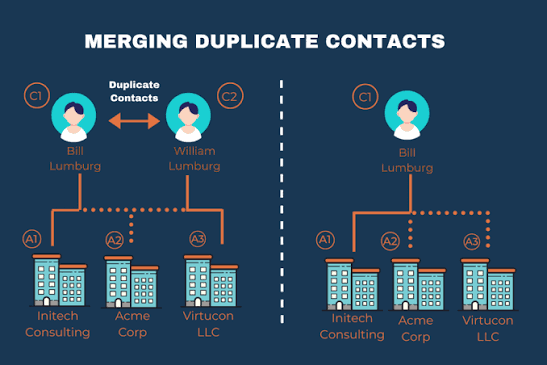
Duplicate ownership is the third cost. Sales may update one field, product marketing another, and the agency a third. That leads to mismatched claims. The fix is boring but effective: assign one owner for the listing source of truth and one reviewer for any public change that affects claims, pricing, or compliance.
Stale data is the final cost, and it hurts most. A listing with a removed integration, an outdated screenshot, or an old pricing tier can still attract traffic, but it also creates distrust. The buyer rarely tells you why they left. They just do.
For that reason, I would not recommend a broad listing program for a team that cannot keep a single product page current. If the core website is changing weekly and nobody owns public copy, adding twelve directories will magnify the problem, not solve it.
Which setup is best for a small SaaS team?
A small SaaS team should choose a narrow, maintained set of listings, not an aggressive everywhere-at-once program. For a team with limited bandwidth, the best setup is usually one or two review/comparison sites, one core marketplace or app store, and one or two integration directories that map to the product’s strongest use case.
This approach wins because it keeps the maintenance load realistic. A small team can keep five listings current. Ten or fifteen becomes harder unless there is a dedicated operations owner. If you do not have that owner, the odds of stale copy rise fast.
The strength of a small-team setup is focus. You can write tighter descriptions, choose better categories, and respond to reviews or listing issues faster. The weakness is coverage. You will miss some channels, and that is fine if the channels you keep are the ones that actually match how people buy.
I would not advise a small team to chase every “free submission” opportunity. Free is not free if the listing creates support overhead, verification work, or a broken surface later. I would rather see one carefully managed listing on a channel that matters than five neglected profiles that no one trusts.
For teams selling a low-complexity self-serve product, this small setup can be enough to create a steady trickle of discovery. For enterprise software with a long sales cycle, it will not be enough by itself. In that case, the listing program should support, not replace, field sales, content, and partner motion.
Exception scenarios: when the overall verdict flips
The broad rule is to favor the channel that matches buyer behavior, but there are exceptions where the standard playbook is wrong.
First exception: procurement-led enterprise buying.
If buyers insist on billing through a cloud marketplace or approved vendor channel, a marketplace listing should come before directories, even if the directory traffic looks larger. Procurement friction can outweigh discovery volume.
Second exception: ecosystem dependence.
If the product only works as part of one platform — for example, a CRM app, a cloud security add-on, or a workflow extension — the marketplace tied to that ecosystem may be the only listing that matters. A broad directory strategy will underperform because the buyer is not starting from general search.
Third exception: brand-new products with weak proof.
If the product has little review history or few customer signals, I would not spend early energy trying to win comparison directories first. It can be better to build credibility through a partner listing or a tightly scoped app store page while the proof base grows.
Fourth exception: rapidly changing pricing or packaging.
If the offer changes every few weeks, broad directory exposure can become a liability unless someone owns constant updates. In that case, fewer listings are safer than more listings.
These exceptions matter because the right answer is not “directories good, marketplaces bad” or the reverse. It is “choose the surface that matches how the product is bought and how often the public truth changes.”
The verdict: which one to choose and why
Choose directory listings if your buyers compare vendors before buying, your team is small, and you need flexibility to update copy, categories, and pricing without approval bottlenecks. Choose marketplace listings if your buyers buy inside an ecosystem, procurement matters, or installation and billing through the platform are part of the sale. Neither if you do not have one owner for public product truth, because stale listings will damage trust faster than they create demand.
That is the practical call. For most SaaS teams, I would begin with one strong directory presence and only add marketplaces where the ecosystem fit is obvious. For enterprise or platform-native software, I would reverse that order and lead with the marketplace that shapes the deal.
If the product is still changing weekly, I would keep the listing footprint small until the language, pricing, and integrations stabilize. If the product is stable and buyer research is active, I would expand the list carefully and keep one person responsible for updates.
What should be in every SaaS listing page?
Every SaaS listing page should include the product’s actual use case, who it is for, the core integration or platform fit, current pricing posture, proof points, and a single clear next step. That is the minimum that helps a buyer decide.
I would make sure the page answers five questions quickly:
- What problem does this solve?
- Who uses it?
- What system does it connect to?
- How is it bought or tried?
- Why trust it over the alternatives?
If the page cannot answer those in the first screenful, it is doing too little work. Strong listing pages are specific. Weak ones sound like every other vendor in the category and force the buyer to leave for the website anyway.
A lot of teams over-focus on design and under-focus on clarity. A clean logo and polished screenshots do not rescue a vague description. If the product is for security teams, say that. If it is for RevOps, say that. If it is an integration-first product, say which systems it anchors to. Specificity sells because it narrows doubt.
FAQ
How many SaaS listings should I manage at once?
I would start with three to five and only expand if the current set is current, measured, and clearly contributing to demos, installs, or qualified traffic. More than that can outpace a small team’s ability to maintain accuracy.
Should I submit to every directory that accepts my product?
No. I would submit only to channels that match buyer intent, ecosystem fit, or partner strategy. A long list of low-fit listings usually creates maintenance work without adding real demand.
How often should I update SaaS listings?
A quarterly review works for stable products, but faster-moving products may need monthly checks. If pricing, integrations, or positioning changes often, the review cycle should be shorter.
Do marketplace listings replace my website?
No. They support the buying journey, but the website still needs to carry the full story, trust signals, and conversion path. The marketplace is a distribution surface, not the whole sales engine.
What is the biggest mistake in SaaS listing operations?
The biggest mistake is letting multiple people publish different versions of the product in different places. Once the public truth splits, the listings start competing with one another instead of reinforcing the same message.
Drafted with AI; not yet reviewed by a person.